Social Icons

Photobucket Photobucket

Pages

Wednesday, November 28, 2012

Calcium Propionate - An In-Depth Look

Written by Adam Bronfin

In studying food additives, the first thing you need to know is that whether we mention 
calcium propionate, calcium propanoate or propionic acid, we are talking about the same 
thing. Because as I mentioned before calcium propionate is the calcium salt of propionic 
acid. 

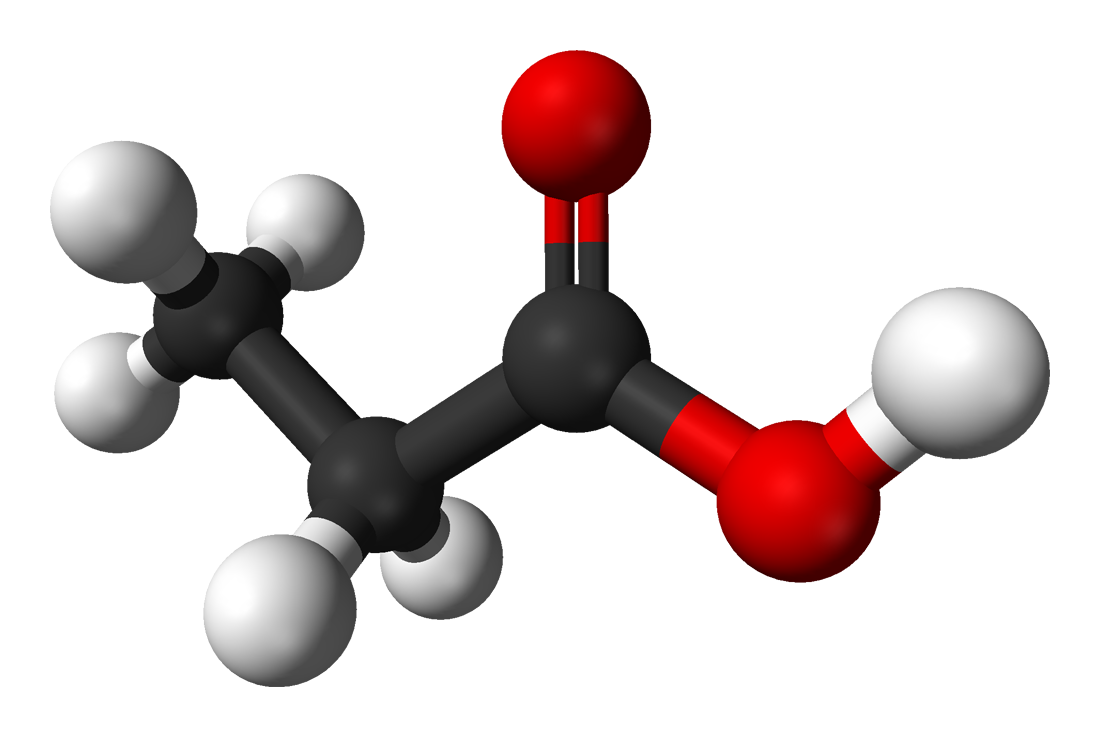
Whether the molecule exists in solution as calcium propionate or as propionic acid 
depends on the pH of the solution.  At lower pH values, the molecule exists as propionic 
acid, and higher pH values it exists as calcium propionate.  The pKa of propionic acid about 4.9, so at a pH values lower than this, the compound is mostly in an undissociated state, 
while above this it’s mostly in a dissociated state.

The way calcium propionate affects food is thought to be caused mostly by the molecule in its undissociated state, which means that the lower the pH, the more effective the
preservative will be. The mechanism of action is thought to be because the undissociated 
molecule is lipophilic (lipid loving) and readily dissolves into cell membranes.  Once the
molecule is there, it may interfere with the membranes permeability. Anything that disrupts membrane permeability makes it hard for cells to function normally.




Tuesday, November 27, 2012

Calcium Propionate - A Chemical Intro

Written by Adam Bronfin

As we begin to figure out a more specific topic for our research, I wanted to post a quick table about the properties of Calcium Propionate, a common food preservative.


CAS No.4075-81-4
Chemical FormulaC6H10O4Ca
Specificationexport standard
PackingIn 25kg bags
Functional usePreservative
ItemsSpecification
AppearanceWhite crystalline powder
Content %≥99.0
Moisture %≤8.0
Water insoluble matter %≤0.15
pH7.0-9.0


While a lot of this may not mean a lot, as its mostly used for commercial purposes, its important to notice the chemical formula. Calcium Propionate is the calcium salt of propanoic acid. As for IMF, according to the Lewis dot structure and what we know about IMF, it can be gathered that there H bonding is the most important IMF.

Monday, November 26, 2012

Benefits of Food Additive

Written by Adam Bronfin

A lot of the posts we've put on this blog and on our twitter have portrayed food additives in a negative way. But, in fact, food additives play a critical role in the agricultural world and allows for millions if not billions of people to eat nutritious meals everyday. We all know that all foods will eventually spoil if they aren’t eaten. Because of this, historically, famines have often been caused by food spoiling between harvests or during transportation. In fact, many common foods were developed as ways to extend the life of fast-spoiling foods. Cheese was most likely invented as a way of preserving milk. Cured meats like ham, bacon, and sausage keep longer than uncured meat, enabling it to survive long journeys or last through the winter. Pickling keeps vegetables from going bad, and adding sugar to fruit keeps it fresh. In fact, we still call sugared fruit “preserves.” Even alcoholic beverages are a form of preserved food—beer is basically fermented wheat, and wine is fermented grapes.


Today we still want our food to stay fresh for as long as possible as it allows for more humans to eat more food. Bread used to become stale and moldy within a few days, but today bread contains preservatives such as calcium propionate to keep them fresh longer. Calcium propionate is a chemical, but it occurs naturally in many foods and dairy products. In lab tests, scientists fed rats the chemical at up to 4% of their total diet for a whole year with no ill effects. BHA and BHT are henolic compounds or in more simple terms they are common preservatives in foods with fats and oils, like potato chips and crackers. They’re antioxidants— chemicals that prevent damage from oxygen (oxidation). All of these chemicals have the same purpose— keeping our food from spoiling.

In later posts we go more in depth on BHA and BHT as well as calcium propionate, but we just wanted to post a quick over view of where we're planning on doing our research.

Tuesday, November 20, 2012

Why Are Food Additives In My Food?

Written by Hyun Kyung Lee


This article states that food additives and preservatives are in foods that we eat everyday. On the back of people's canned or boxed foods, are multitudes of unknown ingredients, but that information is usually neglected. What is the purpose of these food additives and preservatives? Some reasons include a cheap process to keep food from spoiling while maintaining visual appeal. As a consumer, purchasing these products will help in managing a low budget. However, this may not be so beneficial to one, especially in the long run. Some food additives and preservatives attempt to replenish nutrients that may be considered low or deficient in an average diet. Potassium, calcium, and more are commonly added to processed foods and labelled "fortified" afterwards, meaning that the nutrients are usually in synthetic form and are unable to be properly utilized by the body, which can create more nutritional stress in the body. In addition, food additives and preservatives have been linked to several issues such as behavioral problems in children, hyperactivity, anxiety disorders, asthma, allergies, digestive disorders and even cancer.

Saturday, November 17, 2012

Food Dyes and the Consequences

Written by Jane Yoon

Scientists have been extensively looking at the relation between ADHD and food dyes but to no avail. There have been mixed results that do not fully prove a significance yet. However, they have found (through many, many experiments) suggestions that the sugar in food dyes is associated with hyperactivity.
There are food dyes in almost all foods - even ones you wouldn't expect.
There are two types of approved color additives - dyes and lakes. Dyes are water-soluble and usually come in the form of powders, granules, or liquids. Lakes are not water-soluble. They are found in products containing fats and oils. Food dyes are now commercially used to brighten the color of foods so that they look fresher and better tasting. It is enough to capture the interest of children; they enjoy eating blue and green fruit snacks and rainbow yogurt. The Food and Drug Administration says that the food dyes that have been passed are not harmful to the consumers, but if children are exposed to unhealthy amounts of artifical colors, then they are more likely to experience bad side effects and reactions to them.
Scientists are not positive as to what causes ADHD but they have a good idea of what may contribute. Such things include hereditary factors, environmental toxins, changes in brain structure, and food additives. Food dyes are observed in this study because the sugar and carbohydrates in them may have an effect on ADHD. These sugars produce a rapid increase in blood glucose levels because they enter the bloodstream so quickly. A rapid increase in blood glucose levels could cause the consumer (most likely a child) to suddenly become active and full of adrenaline. This is not a fact, but a viable proposal.

Where Your Food Additives Come From


Written by David Zehirov

Our topic is to discuss what food additives do and how they can be dangerous or healthy, but mostly dangerous. To gain more insight into food additives' effects, it would be worthwhile to learn where a few of them come from. This article shows where 5 of the most commonly consumed food additives come from and how they are made. It provides good information on food additives found in most common everyday foods like french fries, sugar, sausages, and any food that has a red color in enough detail to make you rethink about ever looking at that food again. So read at the risk of having you favorite food ruined for you.

Intro to Food Additives

Written by Adam Bronfin

Many people enjoy making bread, cakes, wine, beer, and ice cream at home. However, most of today's food is bought from shops and supermarkets.
Food made at home is always at its best when eaten straight away. Food produced on the large scale that is needed to supply supermarkets and other food shops has to be transported and stored before it is consumed. It has to stay in top condition over a much longer period of time than home-cooked food.
Additives are used so that these foods still have a consistently high quality. In some products, they are so essential that additives are used even in certain organic foods.


Photo of food
Additives are used in a range of foods
In some countries, lots of food is lost because it 'goes off' due to microbial growth before it can be eaten. Food poisoning also shows the dangers of contaminated food and without the use of preservatives, it would quite likely be more common.
Preservatives, colours and flavours are the best known additives but in fact there are many categories of additives, each tailored to a specific purpose.