Social Icons

Photobucket Photobucket

Pages

Friday, December 7, 2012

More On Antioxidants

Written by Daniel Zehirov

As mentioned in a previous post, we will be looking into antioxidants in more detail to discover how they really work and what makes them tick. To gain some general knowledge on antioxidants, you can visit this article or simply read the previous blog post about antioxidants. This time we will be talking in more detail about how antioxidants work to keep us healthy. Antioxidants work to neutralize the oxidants that are created during normal metabolic processes. As mentioned in the previous article, it is impossible to avoid oxidants, but you can certainly consume enough antioxidants to get rid of these oxidants. One example of a rich source of antioxidants are vegetable and fruit. Studies have shown that people who consume more fruits and vegetables are less susceptible to diseases caused by oxidants, such as cancer and heart disease. In addition, people who expose themselves to pro-oxidants like pollution and cigarette smoke, whether it is primary or secondary smoke, are more likely to suffer from oxidative stress.
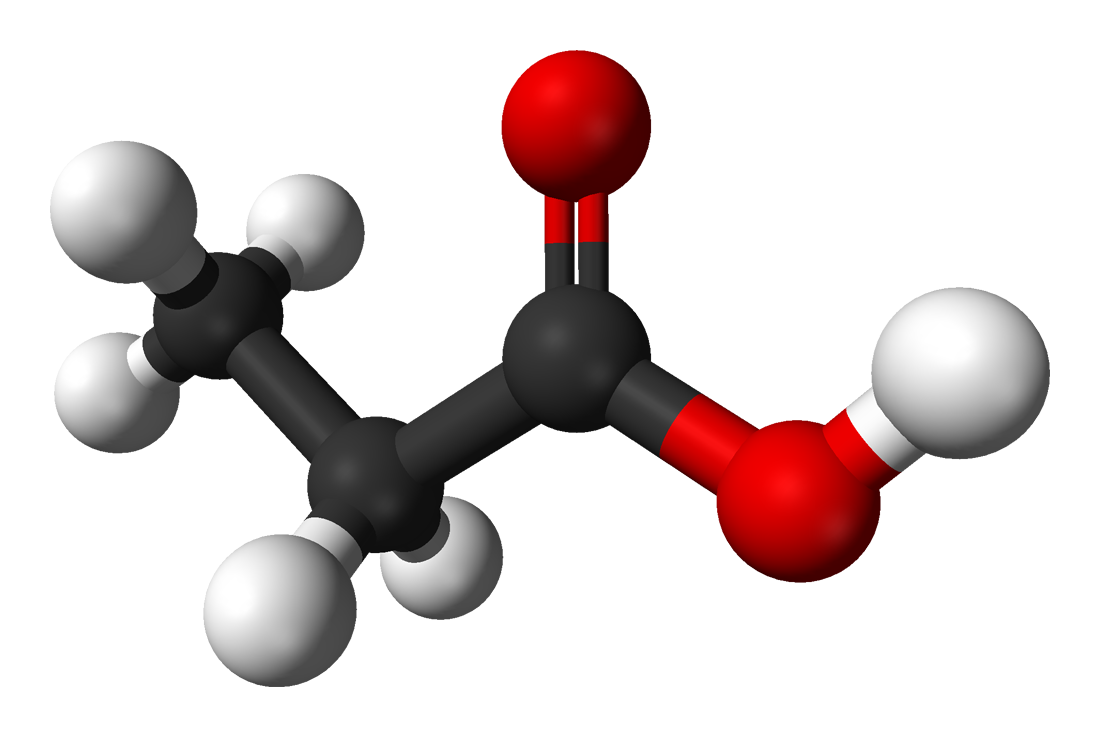
There are different types of antioxidants that serve different purposes. Each type of antioxidant is specialized for treating different oxidized (damaged) parts of the body. For example, the oxidation of lipoprotein in the blood is a contributing factor to heart disease. To prevent this, one takes Vitamin E (Tocopherol) supplements which contain the antioxidants to stop the oxidation of these lipoproteins. This is why Vitamin E is said to help prevent heart disease. As you can see from the image above, which is the structure of Vitamin E, it is a very stable compound and it has no unpaired electrons floating around which means it would not be harmful to our cells. You can read this article to find out what diseases other vitamins and minerals are useful for treating.

More to come on antioxidants soon.

Sunday, December 2, 2012

BHA and BHT - An Intro

Written by Jane Yoon


BHA (butylated hydroxy­­anisole; C11H16O2) and BHT (butylated hydroxytoluene; C15H24O), as previously mentioned, are commonly-used preservatives in foods with fats and oils. Their purpose is mainly to delay the oxidation of foods so that they do not change color, flavor, or odor over time. They do that by reacting with oxygen before it reaches the fats and oils so that the fats and oils do not oxidize and spoil. Thus, BHA and BHT are both antioxidants, something we think is beneficial for our body. But this article questions the net benefits of them.

We can see that the molecular structures of both BHA and BHT are very similar. They are both phenols (hydroxyl group attached to benzene ring). Most antioxidants are polar but BHA is a bit more polar than BHT. Both must be polar in order to react with the oxygen and antioxidize.

Now if we observe the antioxidation effects from this and this experiment (tests on rats and mice), it is not possible to determine whether or not BHA and BHT are completely beneficial or harmful. The first test shows an increase in liver cell protection and the prevention of APAP-induced hepatotoxicity (toxins in the liver). The second test, on the other hand, shows negative effects on the behavior of the tested animals. Not only are we unsure of what action to take on these compounds, but we cannot even assume that these effects will apply to humans as well. This is where the big controversy lies and people are growing furious because they only look at it under a negative light.

Fact: BHA is banned in Japan and California because it is considered a carcinogen (a substance capable of causing cancer in living tissue).

If it is a carcinogen to some places, should it be a carcinogen to all places?


We will continue to look at studies on BHA and BHT.

Thursday, November 29, 2012

Lipoic Acid - An Intro

Written by Adam Bronfin

Within the category of antioxidants, we are going to focus on alpha-lipoic acid. This website gives a a great background of lipoic acid. Other antioxidants, we've mentioned or that you may have heard of, work only in water (such as vitamin C) or fatty tissues (such as vitamin E), but alpha-lipoic acid is both fat- and water-soluble which makes it unique and multi-functional. In other words, that means it can work throughout the body. As we've mentioned before, antioxidants in the body are used up as they attack free radicals, but evidence suggests alpha-lipoic acid may help regenerate these other antioxidants and make them active again. From a more chemical standpoint, in the cells of the body, alpha-lipoic acid is changed into dihydrolipoic acid. This is the reduced form of alpha-lipoic acid. 

Lipoic acid is very common in many foods we eat, often naturally occurring. When it does naturally occur, it is in small amounts and is covalently bonded. 

Here a compiled list of the top uses for alpha-lipoic acid:

  • Prevent organ dysfunction
  • Reduce endothelial dysfunction and improve albuminuria
  • Treat or prevent cardiovascular disease
  • Accelerate chronic wound healing
  • Reduce levels of ADMA in diabetic end-stage renal disease patients on hemodialysis
  • Management of burning mouth syndrome
  • Reduce iron overload
  • Treat metabolic syndrome
  • Improve or prevent age-related cognitive dysfunction
  • Prevent or slow the progression of Alzheimer’s Disease
  • Prevent erectile dysfunction (animal models but anecdotally applies to humans as well)
  • Prevent migraines
  • Treat multiple sclerosis
  • Treat chronic diseases associated with oxidative stress
  • Reduce inflammation
  • Treat peripheral artery disease


List is from http://edenvalleyfarm.com/wp-content/uploads/2010/06/Lipoic-acid-Wikipedia.pdf

Antioxidants - An Intro

Written by Adam Bronfin

Similar to how we're beginning to focus in on Calcium Propionate, Antioxidants will also be one of our main focuses. As the name implies, antioxidants are substances that are capable of counteracting the damaging, but normal, effects of the process of oxidation in animal tissue. Antioxidants are nutrients (vitamins and minerals) as well as enzymes (proteins in your body that assist in chemical reactions). They are believed to play a role in preventing the development of such chronic diseases as cancer and heart disease

Oxidative stress occurs when the production of harmful chemical molecules called free radicals is beyond the protective capability of the antioxidant defenses. Free radicals are chemically active atoms or molecular fragments that have a charge due to an excess or deficient number of electrons. Examples of free radicals are the superoxide anion, hydroxyl radical, transition metals such as iron and copper, nitric acid, and ozone. Free radicals containing oxygen, known as reactive oxygen species (ROS), are the most biologically significant free radicals. ROS include the radicals superoxide and hydroxyl radical, plus derivatives of oxygen that do not contain unpaired electrons, such as hydrogen peroxide, singlet oxygen, and hypochlorous acid.

If you look at the lewis dot structure of these "free radicals", you will be able to see the unpaired electrons. Because they have one or more unpaired electrons, free radicals are highly unstable. They scavenge your body to grab or donate electrons, thereby damaging cells, proteins, and DNA (genetic material). The same oxidative process also causes oils to become rancid, peeled apples to turn brown, and iron to rust.

It is impossible for us to avoid damage by free radicals. Free radicals arise from sources both inside (endogenous) and outside (exogenous) our bodies. Oxidants that develop from processes within our bodies form as a result of normal aerobic, metabolism, and inflammation. Exogenous free radicals form from environmental factors such as pollution. Our antioxidant systems are not perfect, so as we age, cell parts damaged by oxidation accumulate.

We will be doing a more in-depth look at antioxidants, including the chemistry, later on.

Wednesday, November 28, 2012

Calcium Propionate

Written by Adam Bronfin

This article is a great, but simple article describing the uses of calcium propionate. While its not as in depth as the other posts we've put on this blog, its a great article to realize the practical uses of the molecule.

Baked goods- helps prevent mold, Calcium Propionate has an acidic pH

Dairy products- often, a form of Calcium Propionate is naturally found in dairy products

Meat- Various processed meats include Calcium Propionate, not so much with fresh meat

Calcium Propionate - An In-Depth Look

Written by Adam Bronfin

In studying food additives, the first thing you need to know is that whether we mention 
calcium propionate, calcium propanoate or propionic acid, we are talking about the same 
thing. Because as I mentioned before calcium propionate is the calcium salt of propionic 
acid. 

Whether the molecule exists in solution as calcium propionate or as propionic acid 
depends on the pH of the solution.  At lower pH values, the molecule exists as propionic 
acid, and higher pH values it exists as calcium propionate.  The pKa of propionic acid about 4.9, so at a pH values lower than this, the compound is mostly in an undissociated state, 
while above this it’s mostly in a dissociated state.

The way calcium propionate affects food is thought to be caused mostly by the molecule in its undissociated state, which means that the lower the pH, the more effective the
preservative will be. The mechanism of action is thought to be because the undissociated 
molecule is lipophilic (lipid loving) and readily dissolves into cell membranes.  Once the
molecule is there, it may interfere with the membranes permeability. Anything that disrupts membrane permeability makes it hard for cells to function normally.


Tuesday, November 27, 2012

Calcium Propionate - A Chemical Intro

Written by Adam Bronfin

As we begin to figure out a more specific topic for our research, I wanted to post a quick table about the properties of Calcium Propionate, a common food preservative.


CAS No.4075-81-4
Chemical FormulaC6H10O4Ca
Specificationexport standard
PackingIn 25kg bags
Functional usePreservative
ItemsSpecification
AppearanceWhite crystalline powder
Content %≥99.0
Moisture %≤8.0
Water insoluble matter %≤0.15
pH7.0-9.0


While a lot of this may not mean a lot, as its mostly used for commercial purposes, its important to notice the chemical formula. Calcium Propionate is the calcium salt of propanoic acid. As for IMF, according to the Lewis dot structure and what we know about IMF, it can be gathered that there H bonding is the most important IMF.